

Good sleep improves children’s mood
Can good sleep improve children’s mood? Healthy sleep tips for children under 6 years old.
On December 14, the international authoritative journal “Network Open Source Sub-Journal of the American Medical Association” published online a report by a team of researchers from the National Children’s Medical Center (Shanghai) and the Shanghai Children’s Medical Center affiliated to Shanghai Jiao Tong University School of Medicine, including Professor Jiang Fan and Wang Guanghai of Developmental and Behavioral Pediatrics, using large crowds. Cohort study reveals correlations between early childhood sleep and emotional and behavioral problems. The study followed 17,182 3-4-year-old preschool children for 3 years from the time they first entered kindergarten. It was found that the relief of children’s sleep problems in this age group may be beneficial to the improvement of their emotional and behavioral problems; while those that persist Sleep problems or new sleep problems are closely related to the occurrence of emotional and behavioral problems.
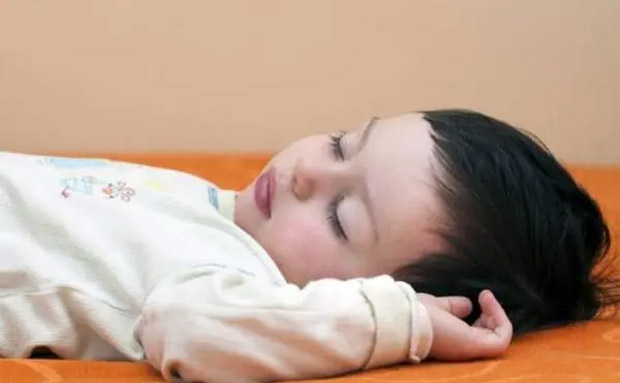
Sleep
People often say “he sleeps like a baby” to describe a person who has high sleep quality. Do babies and young children also have sleep problems? “Sleep problems in infants and young children are much higher than we thought.” Jiang Fan told reporters that sleep problems are one of the common complaints from parents in pediatric clinics. Research data from European and American countries show that children under 6 years old suffer from or The incidence rate of people who have had sleep problems is about 20%-30%, while in our country the incidence rate is 30%-40%.
Good sleep improves children’s mood
The research results of the team of Professor Jiang Fan and Researcher Wang Guanghai show that the improvement of sleep problems, especially the improvement of sleep resistance, sleep anxiety, insufficient sleep duration, and parasomnia, is closely related to the improvement of children’s emotional and behavioral problems. Therefore, early prevention and intervention of children’s sleep disorders may be an effective and scalable strategy to prevent and intervene in children’s emotional and behavioral problems. These results will provide strong scientific basis for guiding the establishment of a precise sleep prevention and intervention system, guiding parents in scientific parenting, and promoting children’s sleep and mental health.
Healthy and good sleep not only promotes children’s physical growth, but also helps children’s brain development, language, cognitive and social and emotional development. Jiang Fan pointed out to reporters several small details that parents usually don’t notice but often happen and may affect children’s sleep:
- 1. Get up early for school and sleep late on weekends. This kind of “social jet lag” is not allowed. The time difference between school and weekends should not be too big. It is best not to exceed one hour, because this is very detrimental to children who have poor sleep.
- 2.The bed must be a place to sleep. Some children jump on the bed, play various games, and get excited when they see the bed. The more a child has trouble sleeping, the more important it is to help him develop habits. Parents cannot turn the bed into a place to play with their children.
- 3.Some children fall asleep easily after taking a bath, while others have to make a big fuss in the bathroom. Sleeping should have a routine. Parents should put activities that can calm their children before going to bed, and arrange them according to the children’s own characteristics.
So how can you help children under 6 years old maintain healthy sleep? “Tips” attached:
1.Sleeping environment
- The bedroom should have fresh air and a suitable temperature. If necessary, turn on a small light in the bedroom and turn it off after going to bed. It is not advisable to place TVs, computers, game consoles and other equipment in the bedroom.
2.Bed style
- Babies should sleep in their own crib, in the same room as their parents. In early childhood, the baby can gradually transition from a crib to a crib. Families with the conditions should allow children to sleep in a separate room.
3.Keep a regular schedule
- From the age of 3 months to 5 months, children’s sleep gradually becomes regular, and it is advisable to have a relatively fixed bedtime, usually no later than 21:00, but going to bed too early is not recommended. Maintain a fixed, regular sleep schedule during holidays.
4.Activities before bed
- Arrange 3 to 4 activities before going to bed, such as washing, using the toilet, telling stories, etc. The content of activities is basically the same every day, fixed and orderly, warm and moderate. The activity time should be controlled within 20 minutes. At the end of the activity, try to ensure that the children are in a quiet state.
5.How to fall asleep
- Cultivate children’s ability to fall asleep alone. When children are drowsy but not asleep, place them in separate cribs to sleep. It is not advisable to rock or cuddle them to sleep. Separate feeding or eating time from sleep, and feed your child at least 1 hour before bedtime. Allow children to hold comfort objects to sleep. When a child cries, parents should wait patiently for a few minutes, then enter the room and stay with the child for 1 to 2 minutes, then leave immediately, wait again, and gradually extend the waiting time to help the child learn to fall asleep alone and successfully complete the entire night of continuous sleep.
6.Sleeping position
- It is recommended that babies sleep on their backs after birth, and it is not advisable to sleep on their stomachs or sides until the infants and young children can change their sleeping positions on their own.